
About me
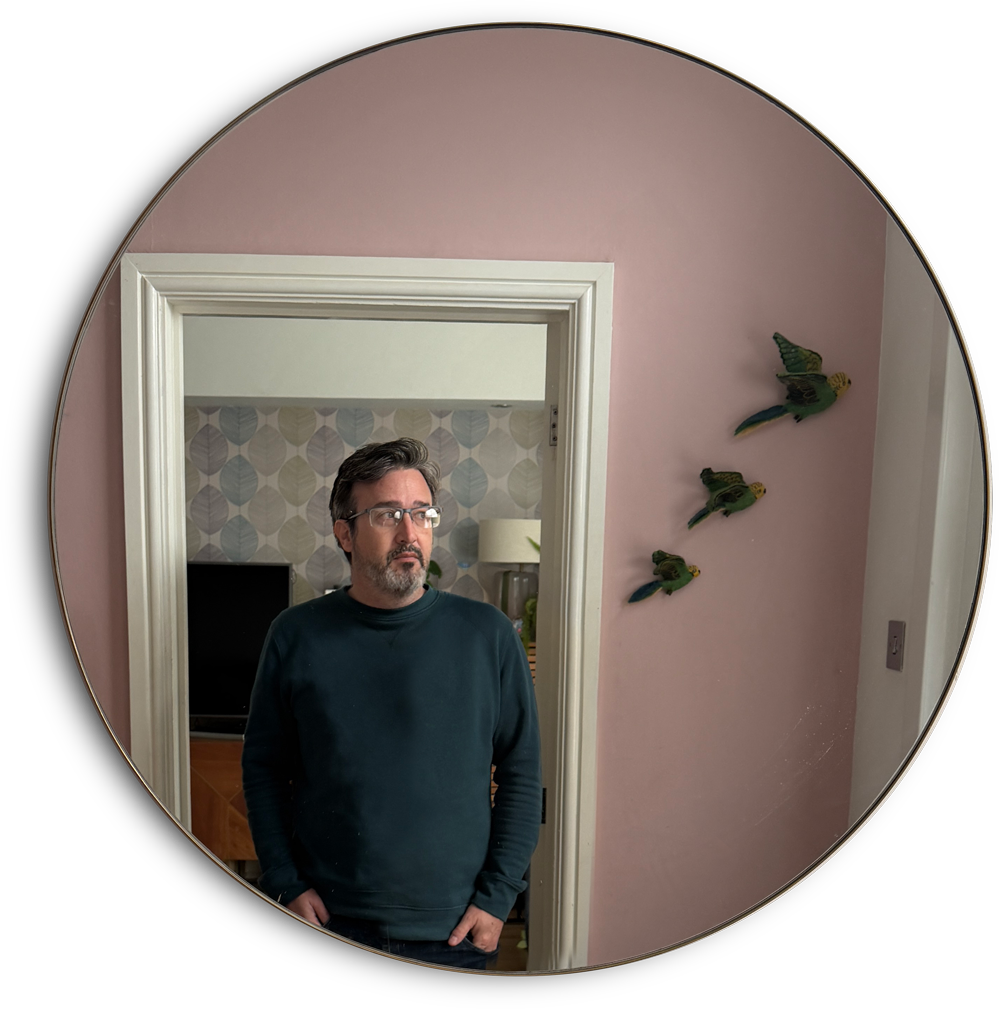
My name is Kester Hackney — the artist behind Tigerlino. I live in Walmer on the Kent coast and work primarily from a small garden studio filled with a press, carving tools, blocks of lino and shelves of ink. By day I’m a website developer and outside of the 9 to 5 I’m usually found in my studio working on something creative.
Hello 🙂
I studied illustration and graphic design at Liverpool John Moores University, graduating in 1997. Since then I’ve been involved in various creative projects and exhibitions, but over the past 10 years I’ve focused more intently on developing my practice as a printmaker. Whenever I can carve out time around family life and work, you’ll find me in the studio carving lino or experimenting with gelliprints or screen printing.
Before printmaking became my central creative outlet, much of my professional work was shaped by briefs and commercial direction. Linocutting offered something different — a space to follow instinct, curiosity and play. What began as an after-hours creative escape quickly became something far more absorbing.
In the early days I faced the practical frustrations of hand-printing without proper equipment, losing many prints to smudges and uneven pressure. Investing in a solid press transformed the process and allowed me to build a functioning studio setup at home. From that point on, the work gained momentum.
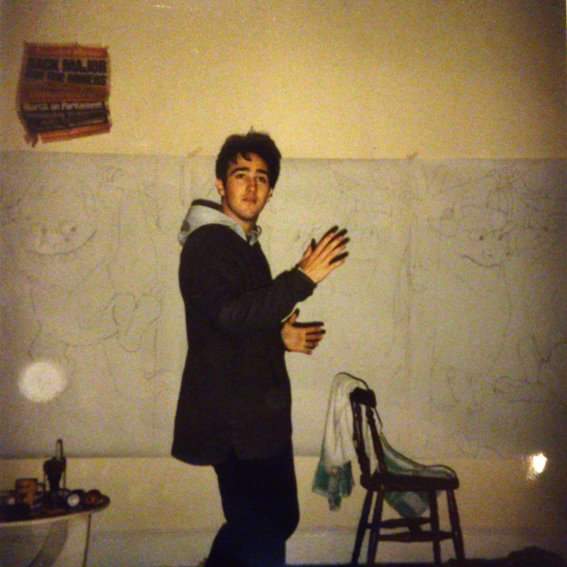
I studied Illustration and Graphic Design at Liverpool Uni back in the 90s. Here I am making a giant wall mural of the 'Where the Wild Things Are' by Maurice Sendak

I studied Illustration and Graphic Design at Liverpool Uni back in the 90s. Here I am making a giant wall mural of the 'Where the Wild Things Are' by Maurice Sendak
My style draws on naïve art, mid-century illustration, abstract and cubist influences. I’m particularly drawn to bold shapes, distorted perspective and strong colour. I like to exaggerate form and character, leaning into odd proportions and slightly ambiguous narratives that leave space for interpretation. Many of my prints feature unusual figures — robots, birds, mermaids and other slightly eccentric personalities — each with their own quiet story.
The process itself is fluid. Sometimes an idea is fully formed before I begin; other times it evolves directly on the lino as I carve. I enjoy that unpredictability — watching a character emerge line by line. I’m constantly noticing unexpected shapes and patterns in the world around me, which often spark new compositions.
Working by hand provides a welcome contrast to time spent at a screen. The physical act of carving, inking and pressing is grounding and deliberate. I produce small editions because I value their intimacy — each print carefully made, each one part of a limited run.
Tigerlino is ultimately about curiosity, craftsmanship and making work that feels distinctive, playful, silly and a little unexpected.
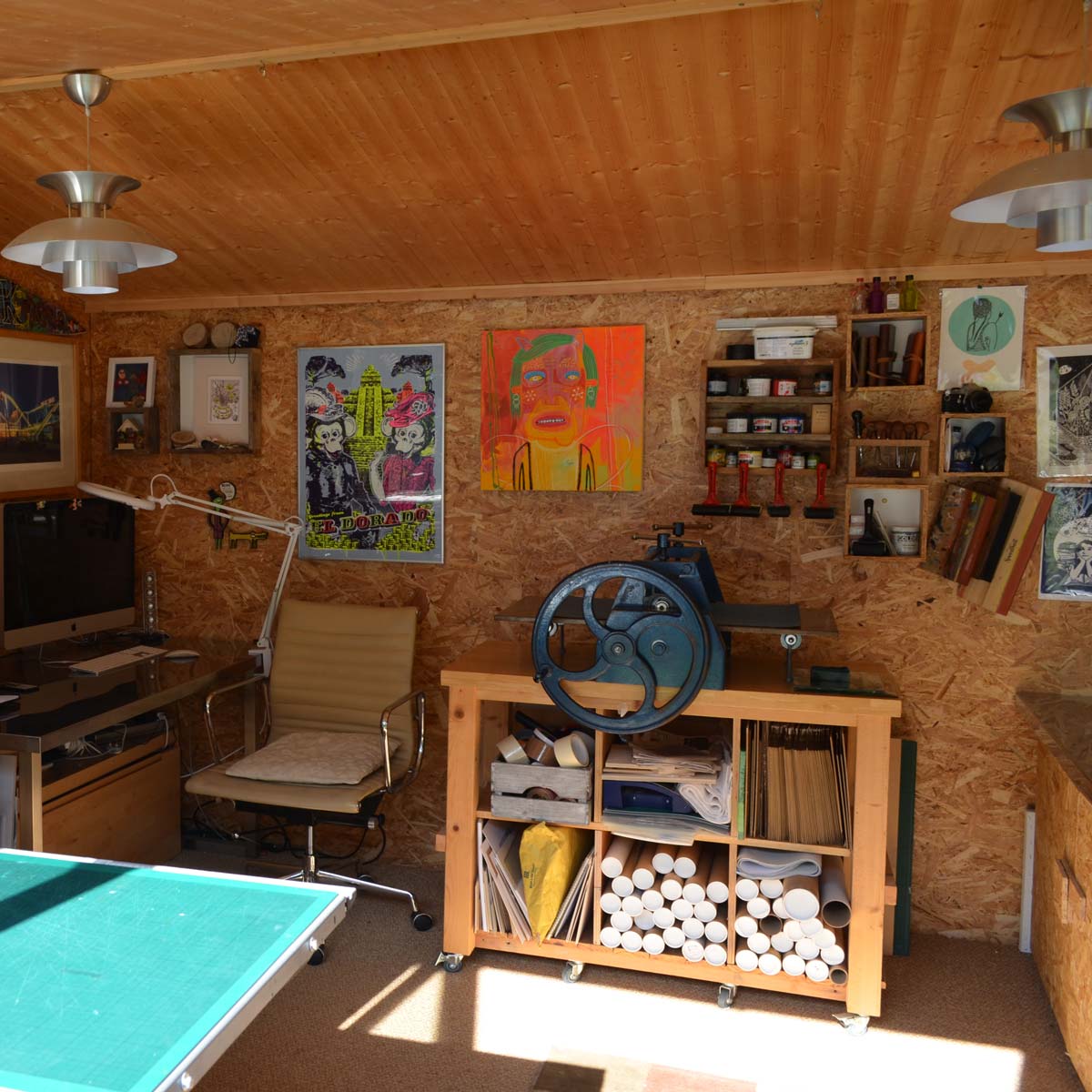
This is my little studio in my garden. It’s a great place to work but occasionally gets too full because of all the projects and work I have going on in there.
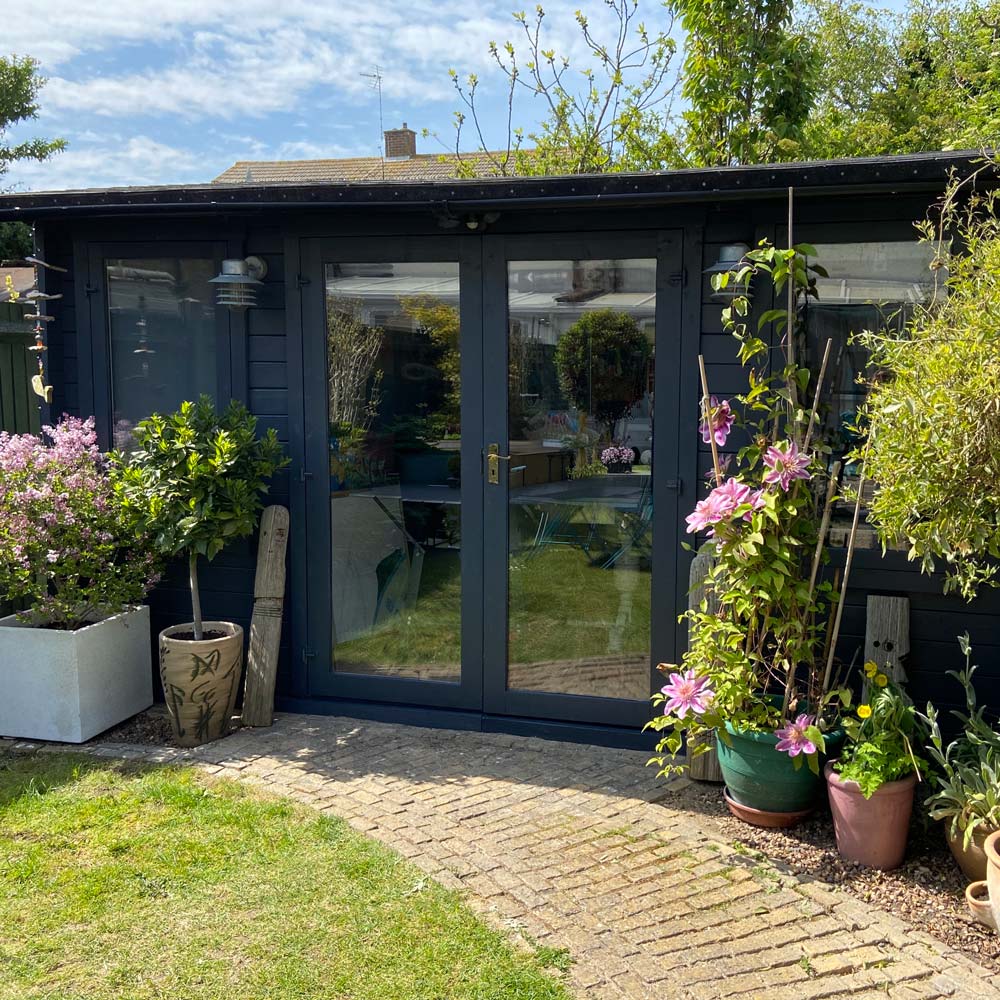
It would be great to have another floor built onto the top of my studio. If you have the space and the budget to buy yourself a studio for the garden, I’d thoroughly recommend it.


Although not many giant monster fisherman visit, this is the pier in Deal, Kent where I live. It’s a fantastic place to come and visit and has a lively and interesting artistic community.
A year of prints
At one point I realised that if I wanted to take printmaking seriously, I needed to raise my standards — and my equipment. I was printing with a reengineered mangle that never quite delivered consistent results, and I didn’t have the patience for endless hand burnishing. The inks I was using were poor quality, and I had no proper space to dry work. I was hitting a ceiling.
So I decided to create a project called A Year of Prints.
I offered a small group of early supporters the opportunity to receive every print I produced over the course of a year, in exchange for a modest upfront fee. It was a leap of faith — for me and for them. I couldn’t promise how many prints there would be, only that they would receive them all.
The response gave me enough momentum to invest in a solid second-hand etching press, a full-size A1 drying rack and a set of Cranfield inks — all completely transformative additions to my studio. The difference in quality and consistency was immediate.
By the end of the year, each backer had received around fifteen prints. More importantly, I had built not only a properly equipped studio but real confidence in my practice. That project marked the point where printmaking stopped being something I fitted around other things and started becoming something I was truly building.
It was practical, slightly risky, community-driven — and genuinely exciting. It changed everything.
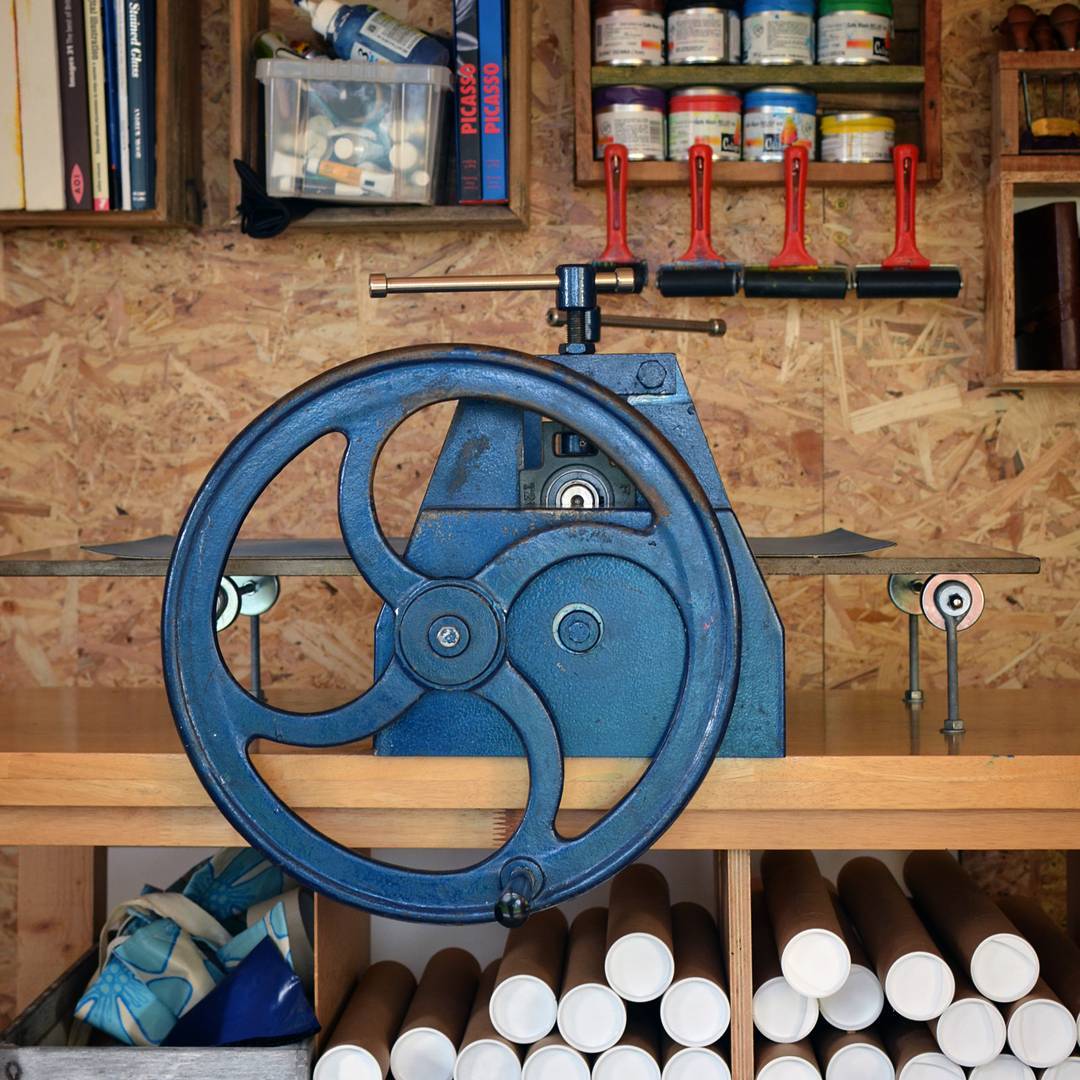
This was the press I bought to try and get much better results. It’s an Art Etching Press – Model EP3318. Here’s a link to a new version of it. It’s such a solid press and I would be lost without it.
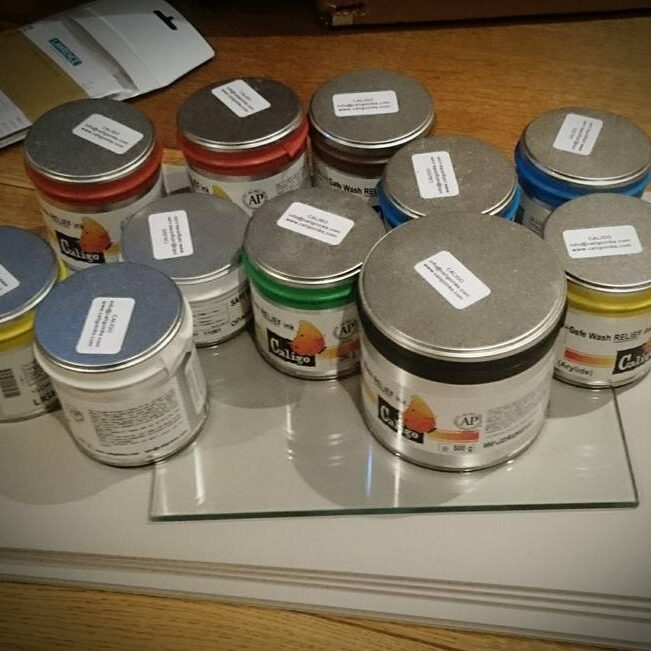
Here are the inks that I use. They are Caligo Safe Wash Relief inks and I can't recommend them enough. If you are just starting out making linocuts, upgrading to better inks will make a huge difference to you.
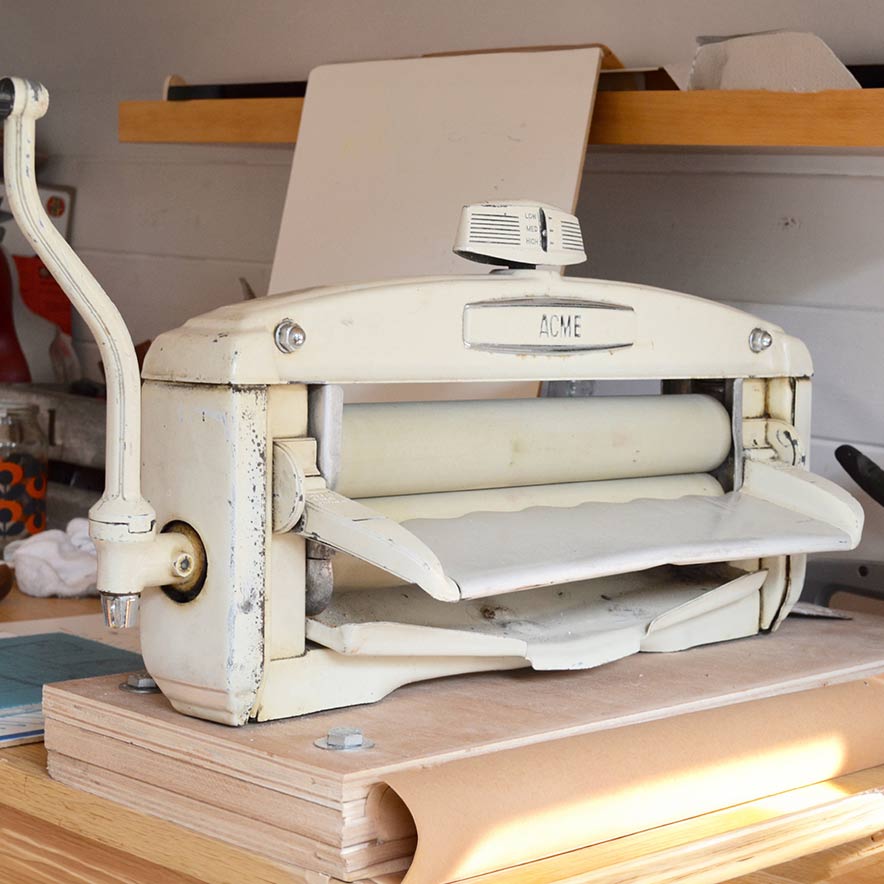
I found this little mangle on eBay and customised it so that I could run prints through it. It worked (sometimes) and more often than not I found that I was throwing away half of the prints that I made.